


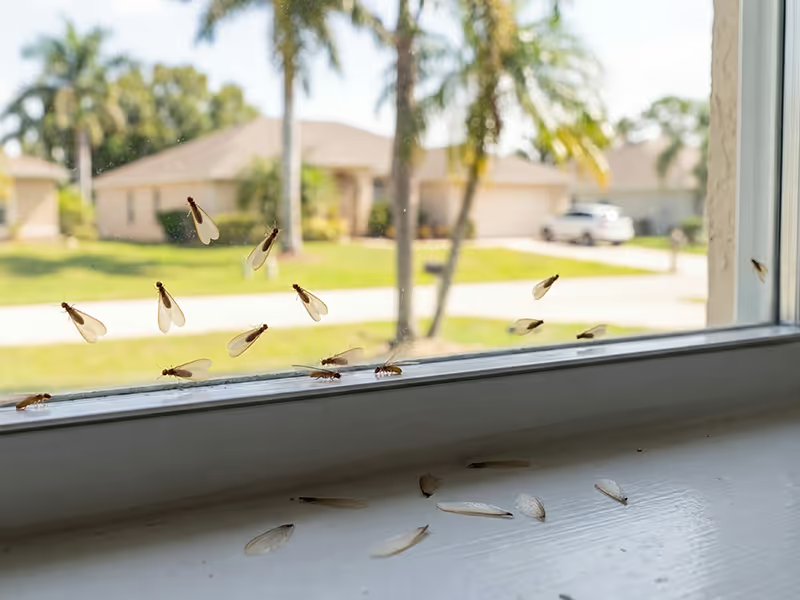
When Is Subterranean Termite Swarm Season in Tampa Bay?
Subterranean termites in the Tampa Bay area typically swarm:
- February through June
- On warm, humid afternoons
- Often within a day or two after rainfall
- During calm wind conditions
Florida’s sandy soil, high humidity, and long warm season create ideal conditions for termite activity nearly year-round, but the spring swarm season is when colonies reproduce and expand.
Many homeowners search:
- “Termite swarm after rain”
- “Flying termites in house”
- “Termites in yard”
- “Termites coming out of wall”
- “Are these swarmers?”
These are commonly subterranean termite scenarios.
Outdoor vs. Indoor Swarms: What’s the Difference?
Not all swarms mean the same thing.
If You See Termites Swarming Outside
They may be emerging from:
- Soil near your foundation
- Mulch beds
- Tree stumps
- Expansion joints in sidewalks or driveways
- A neighboring property
Because subterranean termites live in underground colonies, outdoor swarms are common during swarm season.
An outdoor swarm is not a sure sign there’s an active termite infestation in your home, but it does mean at least one active termite colony is nearby. If conducive conditions exist, your structure could be at risk.
If Termites Are Swarming Inside
If swarmers are:
- Emerging from baseboards
- Coming through the flooring joints
- Appearing near plumbing penetrations
- Collecting around interior windows
There is a much higher likelihood that a colony is established beneath or directly connected to the structure.
Indoor swarms typically indicate structural involvement and should be evaluated promptly.
If swarmers are emerging inside your home right now, call (727) 295-3905 or click here to schedule a termite inspection before the colony has a chance to expand further.
What a Subterranean Termite Swarm Actually Means
The flying termites homeowners see during a swarm are called swarmers or alates. These are reproductive termites leaving the colony to start new ones.
Important: A swarm — especially indoors — usually means a colony is already established nearby.
Subterranean termites live in soil. They build underground colonies and travel into homes through hidden entry points like:
- Slab cracks
- Expansion joints
- Plumbing penetrations
- Foundation gaps
- Areas where wood touches soil
Unlike drywood termites, they do not live entirely inside wood. They must stay connected to the soil for moisture.
That’s why their behavior — and treatment — is completely different.
While swarmers are often the first thing homeowners notice, they’re not the only warning sign. See our guide to other signs of termite activity in Tampa Bay homes to learn what else to look for.
Signs You’re Dealing with Subterranean Termites
Here’s what makes subterranean termites distinct:
1. Mud Tubes Along the Foundation
Mud tubes along the foundation are one of the clearest signs of subterranean termite activity. If you’re unsure what they look like or where they appear around Tampa Bay homes, see our guide to termite mud tubes.
Drywood termites do not build mud tubes.
2. Swarmers Emerging from Soil-Level Areas
You may notice:
- Wings collecting near sliding glass doors
- Swarmers around lanai slabs
- Activity near garage expansion joints
- Termites emerging from cracks in tile or grout
In Tampa Bay slab homes, plumbing penetrations and foundation joints are common entry points.
3. Moisture-Related Conditions
Subterranean termites aren’t just attracted to moisture — they depend on it.
Because they live in underground colonies, they must stay connected to damp soil or high-humidity environments. That’s why moisture issues dramatically increase risk.
High-risk conditions include:
- Leaking hose bibs
- AC condensation lines draining near the foundation
- Poor grading or standing water
- Mulch piled against exterior walls
- Wood siding or trim touching soil
- Untreated or humid crawl spaces
In Tampa Bay’s high-humidity environment, especially in homes with irrigation systems, dense landscaping, or poor drainage, these moisture conditions can quietly support subterranean termite colonies for years.
What To Do Within 24 Hours of Seeing a Swarm
If you see swarmers indoors:
Don’t Spray Random Chemicals
Store-bought sprays kill visible termites — but not the colony. Spraying can actually cause them to relocate and make treatment more difficult.
Collect a Sample (If Possible)
Place a few swarmers in a bag or container. Proper identification matters because treatment differs between:
- Subterranean termites
- Drywood termites
- Flying ants
Schedule a Professional Termite Inspection Promptly
- The swarm itself may last minutes or hours — but the colony remains active year-round.
- In Tampa Bay slab homes, indoor swarmers often indicate an established colony beneath or directly connected to the structure. The only way to confirm the extent of activity is a professional inspection.
- Early evaluation can mean simpler treatment, less disruption, and better long-term protection.
If you’re seeing swarmers now, this is the right time to schedule a termite inspection.
How Anti-Pesto Inspects for Subterranean Termites
At Anti-Pesto Bug Killers, a subterranean inspection differs from a drywood inspection because the risk factors are different.
Exterior Inspection Focus
We examine:
- Entire foundation line
- Slab edges and expansion joints
- Mud tubes (active or inactive)
- Soil-to-wood contact
- Landscaping and mulch height
- Drainage patterns
- Conducive moisture conditions
- Plumbing entry points
Interior Inspection Focus
Inside the home, we evaluate visible and accessible areas where subterranean termites commonly surface in Florida slab construction.
Because subterranean termites travel upward from the soil, interior warning signs are typically found low on walls and along structural seams.
That typically includes:
- Baseboards and trim along exterior-facing walls
- Flooring transitions near slab joints
- Areas around plumbing penetrations in kitchens, bathrooms, and laundry rooms
- Garage expansion joints and wall seams
- Entry points where patios or lanais connect to the main structure
Rather than tearing into walls, we look for conditions that indicate concealed activity — such as subtle paint bubbling, soft or hollow-sounding trim, moisture patterns near slab edges, or discarded wings near windows and doors.
Subterranean termites often remain hidden inside wall voids, so identifying risk indicators is just as important as spotting visible damage.
Why Subterranean Termite Swarms Create Urgency
When homeowners see swarmers, the biggest question is:
“Is my house already infested?”
If swarmers are emerging indoors, there is a strong likelihood that a colony is already established beneath or connected to the structure.
Subterranean termites can feed quietly for years before visible structural damage appears. That’s why swarm season creates urgency — not because of scare tactics, but because delayed evaluation increases the risk of ongoing termite damage.
Termite Treatment & Long-Term Protection Options
If Active Infestation Is Confirmed
Solutions may include:
- Professional liquid termite treatments around the foundation
- Termite baiting systems designed to eliminate the colony
- Targeted corrective treatments where activity is detected
If No Structural Activity Is Found
Preventative options may include:
- Protective soil barriers
- Monitoring bait systems
- Moisture correction recommendations
- Eliminating soil-to-wood contact
Every home is different — whether it’s built on a slab, raised on a crawl space, or elevated for flood protection. In Florida’s humid climate and sandy soil, those differences matter when it comes to termite risk.
Subterranean vs. Drywood Termites: Why the Difference Matters
Many Tampa Bay homeowners assume “termites are termites.”
They’re not.
Subterranean termites live in underground colonies and enter homes from the soil. Drywood termites live entirely inside wood and behave very differently.
If you’re seeing signs more consistent with drywood termites, read our guide to drywood termite swarm season in Tampa Bay to understand how their behavior and treatment differ.
If You’ve Seen a Swarm in Tampa Bay, Here’s the Next Step
Whether the activity occurred outdoors or inside your home, a swarm is a sign that subterranean termites are active nearby.
The key question is whether that colony is connected to your structure — and if so, how to eliminate it properly.
Anti-Pesto Bug Killers has been protecting Tampa Bay homes since 1988. As a local, family-owned company, we understand how Florida’s year-round termite pressure affects homes in this area.
We don’t just inspect for termites — we identify the source of activity, eliminate active colonies when present, and provide long-term protection tailored to your home.
We will:
- Confirm the species
- Determine whether structural involvement exists
- Identify risk conditions around your foundation
- Recommend and implement the appropriate termite control solution
If you’ve noticed swarmers, mud tubes, or termite activity after heavy rain, now is the time to have your home evaluated.
Schedule your termite inspection and termite control consultation today — and get clear answers from a team that’s been serving homeowners throughout Tampa Bay, including Hillsborough, Pinellas, Pasco, and Polk counties, for decades.
Subterranean Termite Swarm FAQs
Do subterranean termites swarm at night or during the day?
In Tampa Bay, subterranean termites typically swarm during the daytime — often in the late morning or afternoon after warm rain. Swarms are brief, usually lasting less than an hour.
How can I tell the difference between termite swarmers and flying ants?
Termite swarmers have:
- Straight antennae
- Two pairs of wings that are equal in length
- A thick, straight waist
Flying ants have:
- Bent (elbowed) antennae
- Front wings that are longer than back wings
- A narrow, pinched waist
Because treatment differs significantly, proper identification is important before taking action.
How long does a subterranean termite colony live?
A subterranean termite colony can survive for many years — sometimes over a decade — if undisturbed. Colonies grow gradually and may remain hidden beneath the soil long before swarmers appear.
Do subterranean termites only infest older homes?
No. Subterranean termites are attracted to moisture and wood-to-soil contact, not home age. Both newer and older homes in Tampa Bay can be vulnerable if conducive conditions exist.
Can subterranean termites return after treatment?
Given Florida’s climate, termite pressure is ongoing — which is why ongoing monitoring or protective treatment is the best approach. Effective termite control focuses on eliminating active colonies and establishing a barrier or baiting system to prevent future infestations.


