
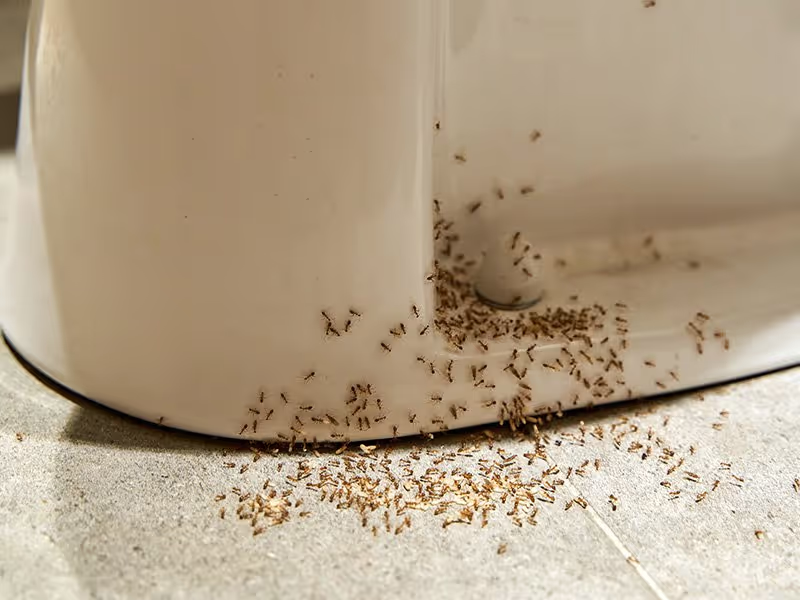
Why Ants Show Up in Bathrooms
Bathroom ant infestations are rarely about cleanliness.
Ants are usually attracted to:
- Reliable moisture (condensation, slow leaks, damp cabinetry)
- Gaps around plumbing penetrations
- Humid wall voids behind showers and tubs
- Cracks along baseboards or tile transitions
- Slab edges or hollow block walls
In Tampa Bay homes, even when surfaces look dry, wall cavities and plumbing chases can stay damp enough to attract foraging ants.
Once they establish a reliable water source, they tend to return consistently.
The Most Common Ants We See in Bathrooms
Many homeowners describe them as “tiny ants” or “sugar ants.” But in Tampa Bay, species identification matters — because the wrong treatment can actually make certain infestations worse.
If you’re seeing ants in multiple areas of your home — not just the bathroom — you may find our broader guide helpful: How To Get Rid Of Ants In Florida.
Ghost Ants (Very Common in Tampa Bay)
If you’re seeing extremely small ants near the toilet base, sink, or shower edge — almost translucent with darker heads — they’re often ghost ants.
Common signs:
- Tiny ants that seem to appear and disappear quickly
- Activity that shifts from one bathroom area to another
- Trails that reappear days after spraying
- Ants spreading into kitchens or laundry rooms
Ghost ants frequently nest inside wall voids, behind baseboards, and inside cabinetry — not just outside the home.
Odorous House Ants (Moisture-Driven and Persistent)
Odorous house ants are another frequent bathroom invader in Tampa Bay.
They are small, dark brown ants that often nest in wall voids, under flooring, or near damp plumbing areas. When crushed, they produce a strong, unpleasant odor.
You may notice:
- Small brown ants near sinks, bathtubs, or shower corners
- Activity increasing after heavy rain
- Ants trailing along baseboards or behind vanities
- Colonies that seem to relocate when disturbed
Because odorous house ants readily relocate their nests when disturbed, random spraying often leads to recurring activity in new areas of the bathroom or home.
Pharaoh Ants (DIY Can Make This Worse)
Pharaoh ants are small, light yellow ants that thrive indoors in warm climates like Florida.
The challenge with Pharaoh ants is that incorrect treatment — especially repellent sprays — can cause colonies to split and spread into multiple new nesting sites.
If you’ve sprayed and suddenly see ants in more areas of the home, this may be why.
When ants begin spreading between bathrooms or rooms, professional treatment is strongly recommended.
White-Footed Ants (Often Misidentified in Florida)
White-footed ants are common across Tampa Bay and frequently mistaken for ghost ants.
They:
- Nest in wall voids and attics
- Travel through plumbing penetrations
- May enter bathrooms from exterior colonies
- Often ignore common over-the-counter baits
In many cases, bathroom activity is just the visible portion of a much larger colony.
Big-Headed Ants (Common in Slab and Block Homes)
If your home is built on a slab — which is common throughout Hillsborough, Pinellas, and Pasco counties — big-headed ants may enter through:
- Slab edges
- Expansion joints
- Plumbing penetrations
- Foundation gaps
They typically nest in soil along the exterior foundation and move indoors seeking moisture. Interior treatment alone usually does not solve the issue if exterior colonies remain active.
Carpenter Ants (Larger Ants in Moisture-Prone Areas)
If the ants you’re seeing are noticeably larger — typically black or reddish-black — they may be carpenter ants.
Carpenter ants are attracted to damp or water-damaged wood and are sometimes found inside bathroom walls, beneath flooring, or around areas with chronic moisture.
Unlike smaller bathroom ants, carpenter ants nest inside wood rather than soil. Their presence can indicate an ongoing moisture issue behind shower surrounds, around plumbing lines, or in structural framing.
Recurring carpenter ant activity should be professionally evaluated.
Why Bathroom Ants in Tampa Bay Rarely Stay in One Spot
One pattern we frequently see at Anti-Pesto:
Ants begin near a sink or shower… then appear along baseboards… then show up in another bathroom or even the kitchen.
That’s because ants commonly travel through:
- Wall voids
- Plumbing chases
- Shared walls in condos and townhomes
Hollow block construction - Attic spaces
What looks like a small bathroom issue can actually involve a larger colony using multiple access routes.
Why Ants Keep Coming Back After DIY Treatment
It’s common to see temporary improvement after spraying.
But in Tampa Bay homes, recurring bathroom ants usually mean:
- The colony is hidden inside walls
- Exterior nests were never addressed
- The wrong bait type was used
- Repellent sprays scattered the colony
- Moisture sources are still active
Sprays kill the ants you see.
They rarely eliminate the ants you don’t.
And with certain Florida species, incorrect products can actually increase activity.
If you’ve treated and are still seeing activity, you may find this helpful: Why You’re Still Seeing Bugs After Spraying
Why DIY Ant Treatments Fail
It’s completely understandable to try a spray or bait when ants appear in the bathroom.
The problem is that in Tampa Bay homes, bathroom ants are rarely just surface-level activity.
Most of the species we see — including ghost ants, odorous house ants, white-footed ants, and even carpenter ants — nest in hidden areas such as:
- Wall voids
- Plumbing chases
- Slab edges
- Exterior foundation areas
- Damp structural wood
Over-the-counter sprays typically kill only the ants you can see. They do not eliminate the colony.
In some cases — especially with species like Pharaoh ants — improper spraying can cause colonies to split and spread to new areas of the home.
Bait products can also fail when:
- The wrong bait type is used for the species
- Placement doesn’t align with travel routes
- The colony has multiple nesting sites
- Seasonal feeding preferences shift
If ants keep returning to the same bathroom — or begin appearing in additional rooms — it’s usually a sign the colony was never fully addressed.
Why Professional Ant Treatment Stops the Cycle
When ants keep returning to the bathroom, it’s rarely because something wasn’t cleaned properly.
It’s usually because the colony is still active.
In Tampa Bay homes, ant colonies often nest:
- Inside wall voids behind showers and vanities
- Beneath slab foundations
- Along exterior foundation walls
- Inside hollow block construction
- In damp structural areas near plumbing
As long as the colony remains active, ants will continue using the bathroom as a water source.
A professional ant inspection focuses on identifying the species, locating the nesting area, and targeting the colony directly — not just treating visible trails.
That distinction matters.
Without addressing the source, ants may disappear temporarily and then return weeks later — sometimes in new areas of the home.
Because Florida’s climate allows colonies to stay active year-round, recurring bathroom ants are rarely a one-time issue.
When It’s Time to Schedule an Inspection
It’s usually time to call a professional when:
- Ants return after spraying
- Activity spreads to additional bathrooms or rooms
- You see ants emerging from wall gaps or plumbing areas
- The problem has lasted more than a few weeks
At that point, the issue is no longer “surface activity.” It’s an established access route.
If you’re noticing one or more of these signs, scheduling a professional inspection can help identify the species, locate the nesting area, and stop the cycle before it spreads further.
Anti-Pesto provides comprehensive inspections throughout Tampa Bay, including Hillsborough, Pinellas, Pasco, Hernando, and Polk counties. If you’d like clear answers and a straightforward treatment plan, contact our team today.
Long-Term Ant Control for Tampa Bay Homes
In our climate, long-term ant control isn’t about reacting when ants appear. It’s about eliminating the source of activity before it keeps returning to your bathroom.
Simple maintenance, such as repairing leaks or improving ventilation, can help reduce attraction. But it does not eliminate established colonies hidden in wall voids, exterior foundation areas, or other protected spaces around the home.
That’s why many Tampa Bay homeowners choose ongoing residential pest control.
Since 1988, Anti-Pesto has been a locally owned, family-operated pest control company serving Hillsborough, Pinellas, Pasco, Hernando, and Polk counties. We understand how year-round humidity and seasonal weather patterns affect ant behavior in Tampa Bay homes.
Our residential pest control services are designed to:
- Identify the ant species
- Locate and eliminate active colonies
- Treat interior and exterior nesting areas
- Prevent ants from re-entering the home with routine pest treatments
Instead of repeatedly treating flare-ups, ongoing protection eliminates current infestations and helps prevent new ones from developing.
For homeowners dealing with recurring bathroom ants or pests in other parts of the house, a structured residential pest control plan provides long-term protection — not temporary relief.
Tired of Seeing Ants in the Bathroom?
If ants keep appearing around sinks, showers, baseboards, or inside wall gaps, it’s usually a sign that the colony is still active nearby.
You don’t have to keep guessing at products or hoping the problem resolves on its own.
A professional inspection can identify the species, determine where the ants are nesting, and create a targeted plan to eliminate the source — not just the symptoms.
If you’re ready for a straightforward solution and long-term protection, contact Anti-Pesto today to schedule your inspection!
Ants in the Bathroom FAQs
Do ants in the shower mean I have a leak?
Not necessarily, but they can indicate excess moisture. If ants keep appearing around the shower base or fixtures, it’s worth checking for hidden leaks — but many infestations are caused by nearby colonies using the bathroom as a water source.
Will ants go away on their own?
In our region, ants rarely disappear on their own. Colonies stay active year-round and will continue returning as long as the nest remains nearby. You may see activity pause temporarily, but without eliminating the source, the problem typically comes back.
What are ants eating in my bathroom?
Bathrooms don’t usually offer traditional food, but ants can survive on small organic residues. Toothpaste splatter, soap residue, hair products, skin cells, and even trace sugars from personal care items and toiletries can attract foraging ants. In many Tampa Bay homes, however, moisture — not food — is the primary reason ants gather in bathrooms.
if(window.strchfSettings === undefined) window.strchfSettings = {};
window.strchfSettings.stats = {url: "https://anti-pesto.storychief.io/en/ants-in-the-bathroom-tampa-bay?id=656741969&type=26",title: "Ants in the Bathroom? Here’s What Tampa Bay Homeowners Should Know",siteId: "16925",id: ""};
(function(d, s, id) {
var js, sjs = d.getElementsByTagName(s)[0];
if (d.getElementById(id)) {window.strchf.update(); return;}
js = d.createElement(s); js.id = id;
js.src = "https://d37oebn0w9ir6a.cloudfront.net/scripts/v0/strchf.js";
js.async = true;
sjs.parentNode.insertBefore(js, sjs);
}(document, 'script', 'storychief-jssdk'))


