
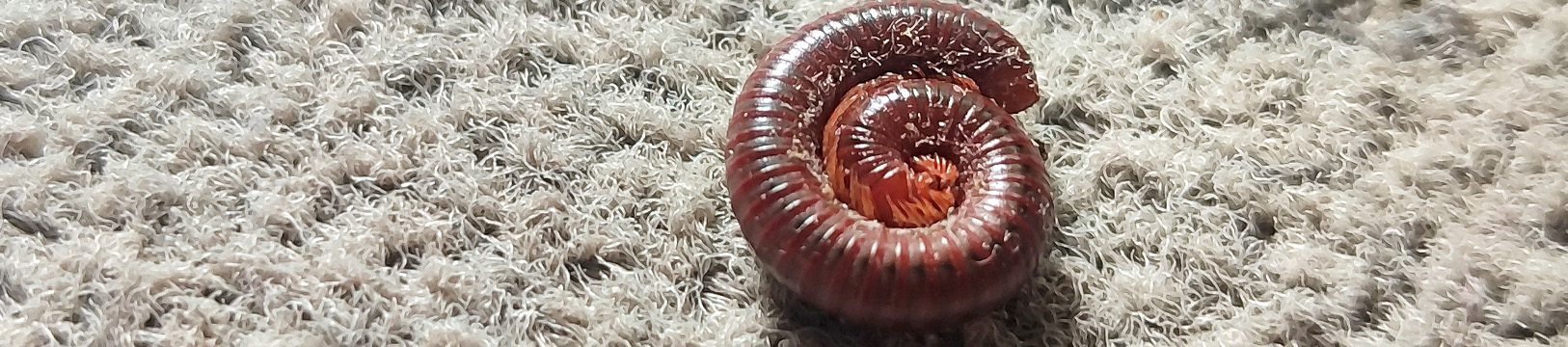
Millipedes are many-legged arthropods, not insects. They have long, segmented bodies with numerous short legs. Most are rounded and cylindrical, although some species have flatter bodies. Their size and coloring vary by species.
Common characteristics include:
Millipedes are sometimes confused with centipedes. However, centipedes generally have flatter bodies, one pair of legs per segment, and longer legs extending outward. They also move more quickly than millipedes.
Florida is home to dozens of millipede species. According to UF/IFAS, three of the most common are:
Although these are among the most common species in Florida, other millipedes may also be encountered. Color alone isn't always enough to identify a particular species.

Millipedes can be active throughout the year in Tampa Bay, but homeowners may notice more activity during the summer rainy season, generally June through September. Heavy rain can saturate soil and cause millipedes to move onto patios, into garages, and sometimes inside homes. However, millipede migrations aren't limited to summer. Extended dry conditions and cooler weather can also trigger movement at other times of year.
Activity levels are general seasonal estimates, not measured monthly pest counts. Actual activity varies with weather and local conditions.
Millipedes prefer damp, shaded locations where they can find decomposing plant material to eat. Around homes, they commonly live in mulch beds, beneath leaves, under flowerpots, and in other places where moisture collects.
They play a useful role outdoors by breaking down dead vegetation and returning nutrients to the soil. Although millipedes are beneficial outdoors, they can become a nuisance when large numbers gather around patios, garages, and entryways or wander inside.
Millipedes don't enter homes looking for people or household food. They typically wander inside through gaps beneath doors, cracks around the foundation, and other small openings.
Homeowners may notice them:
Seeing millipedes inside your home? Call Anti-Pesto Bug Killers at (727) 524-6333 to discuss your pest concerns.
Millipedes do not bite or sting, and they aren't known to transmit diseases to people. They also don't damage sound structural wood or feed on clothing and household belongings.
However, some species release defensive chemicals when threatened. These secretions can cause skin irritation or an unpleasant odor, so it's best to avoid handling millipedes with bare hands. Crushing them can also leave stains on some surfaces.
Their primary concern for homeowners is the nuisance they create, especially when numerous millipedes appear indoors or around entryways.
When millipedes repeatedly appear in your garage, lanai, or home, professional pest control can help reduce unwanted activity.
Anti-Pesto Bug Killers includes millipedes in our Border Patrol Green™ residential pest control plan. With ongoing exterior treatments and interior service as needed, we help Tampa Bay homeowners manage millipedes and other common household pests.
We've been serving Tampa Bay since 1988, providing experienced pest control designed around local conditions.
Removing accumulated leaves and other debris near your foundation, addressing excess moisture, and checking gaps around exterior doors may help reduce millipede activity. However, these measures alone may not prevent large numbers of millipedes from entering your home when outdoor conditions trigger migrations.
Tired of finding millipedes around your home? Anti-Pesto Bug Killers can help. Request residential pest control service online or call (727) 524-6333 to speak with our team.
Millipedes need moisture to survive. When they enter a home and cannot find the damp conditions they require, they often dry out and die. This is why homeowners sometimes discover curled-up millipedes near doors, baseboards, or along garage floors.
Millipedes normally reproduce outdoors, where they lay eggs in soil or other suitable moist habitats. Most homes do not provide the conditions they need to establish populations indoors, although consistently damp areas, including some potted plants, may provide suitable habitat.
Millipedes usually enter from outdoors through small openings rather than traveling through household plumbing. If you find one near a shower or drain, it may have wandered into the bathroom because of the moisture there. Finding millipedes in a bathroom does not necessarily mean they're coming from the drain.

From the first contact call the staff was very professional, courteous and informative. We discussed the issues and set a plan with an appointment within a couple days. Shane, our technician, was very prompt and courteous. Very informative during the inspection process and strategically put a deterrent plan in place. I would highly recommend Anti-Pesto Bug Killers.
Jim J.
Largo, FL

We had a wasp infestation in our backyard shed. Anti-Pesto responded immediately and were out to our place within about two hours and took care of everything thoroughly. They will even follow-up again within two weeks to be sure that the problem does not recur. They are awesome!
Daniel Z.
Largo, FL

Amazing quality work. I’ve had a few pest control companies spray and ants would still enter our home and act as roommates. Sam Hurtado is our technician and he answers everything with knowledge and always brings quality work. Even if there was recent pest work they always arrange if I have issues. Thank you!!
Trish N.
Tampa, FL


Helpful Tips & Info


