

Mud daubers are solitary wasps known for building small, tube-shaped nests out of mud. If you've noticed what looks like clumps of dried mud stuck to the walls of your garage, under your eaves, or along your porch ceiling, there's a good chance a mud dauber put it there.
In Tampa Bay, mud daubers are one of the more common stinging insects homeowners encounter. While they're not aggressive like yellow jackets or paper wasps, their nests can be unsightly and alarming when they start showing up around your home.
Here's what Tampa Bay homeowners should know about mud daubers—what they look like, where they nest, and what to do if you find them on your property.
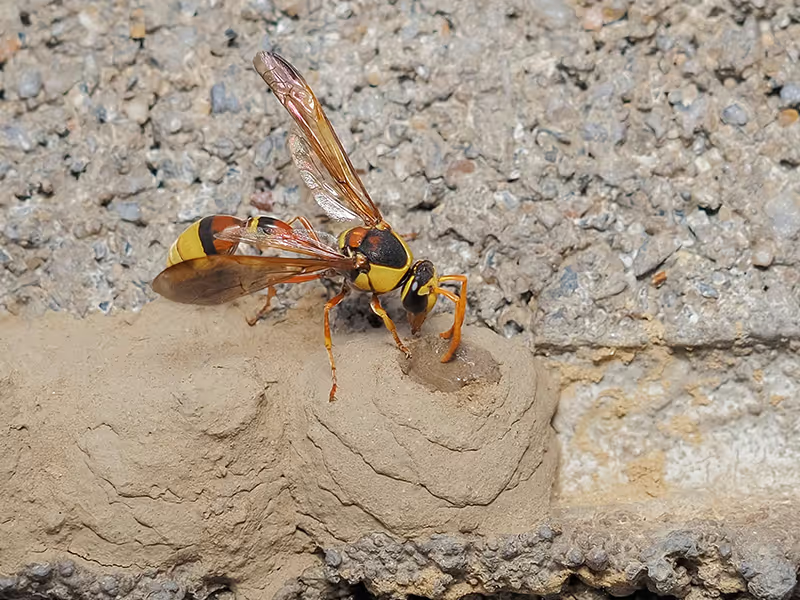
Mud daubers are most active in Tampa Bay from late March through September, when warm temperatures and humidity create ideal conditions for nest building and hunting. Activity peaks during spring and summer as females construct nests, capture spiders, and lay eggs.
During the cooler months—roughly November through February—adult mud daubers die off, and the next generation overwinters inside sealed mud cells as pupae. Because Tampa Bay winters are mild compared to much of the country, mud daubers can emerge earlier here than in northern states, sometimes as early as late February or March.
Mud daubers are easy to pick out once you know what to look for. They're about ½ to 1 inch long with a very thin, thread-like waist connecting their midsection to their abdomen. That narrow waist is the quickest way to tell them apart from other wasps.
Depending on the species, mud daubers in Tampa Bay may be:
They have six legs, a pair of antennae, and clear or dark-tinted wings. Unlike paper wasps or yellow jackets, mud daubers tend to fly slowly and don't hover aggressively around people.
Mud dauber nests are one of the easiest ways to identify these solitary wasps. Instead of the papery, honeycomb-style nests you'd see from paper wasps, mud daubers build with actual mud.
The most common nest types in Tampa Bay include:
Nests are usually tan, brown, or gray, depending on the local soil. If you see small round holes in an existing nest, that typically means the wasps have already emerged and the nest is no longer active.
Mud daubers prefer sheltered spots close to a building's structure. Around Tampa Bay homes, you'll commonly find their nests:
They tend to pick flat, protected surfaces where rain won't wash the nest away. If your garage door stays open during the day or you have a covered patio, those are prime spots.
Mud daubers are drawn to two main things: mud and prey.
Tampa Bay's frequent afternoon rain showers and high humidity keep the ground moist, giving mud daubers a steady supply of building material. Flower beds, garden edges, and areas near irrigation systems are common collection spots.
Prey is the other big draw. Mud daubers hunt spiders and other small insects to feed their young. Adult mud daubers themselves feed on flower nectar and honeydew. If your home or yard has a healthy insect population—common in Florida—mud daubers are more likely to set up nearby.
Sheltered areas with flat surfaces also play a role. Homes with covered patios, screened-in lanais, open garages, or overhanging eaves offer the kind of protected nesting spots mud daubers look for.
Mud daubers aren't coming inside your home the way ants or cockroaches do. They're building on or near your home because it offers everything they need—shelter, mud, and prey.
In Tampa Bay, the combination of warm weather, regular rainfall, and abundant insect populations makes residential properties ideal. Concrete block homes with stucco exteriors, which are common in this area, provide plenty of flat surfaces for nest attachment.
You're most likely to notice new mud dauber activity in spring and early summer, when females emerge and start scouting for nesting sites. But because Tampa Bay stays warm well into fall, nest-building activity can continue longer here than in cooler climates.
Mud daubers are considered one of the least aggressive stinging insects. Because they're solitary wasps—they don't live in colonies—they don't have a large group to defend, which means they rarely sting.
Most of the time, a mud dauber will fly away rather than confront you. Stings are uncommon and usually occur only when the wasp is directly handled or trapped against the skin.
When stings do happen, they're typically mild—similar to a bee sting. You may notice pain, redness, and minor swelling at the site. For most people, it clears up on its own. However, anyone with a known allergy to insect stings should treat a mud dauber sting seriously, as it can trigger a more severe allergic reaction.
That said, mud dauber nests can still create problems:
One of the more frustrating things about mud daubers is that they tend to build in the same spots year after year. Even after a nest is removed, a new female may return to the same location the following spring because the conditions that attracted the first one are still there.
Simply scraping off nests doesn't solve the underlying issue. If the area still provides shelter, nearby mud, and access to insects, mud daubers are likely to come back.
Old nests that aren't removed can also attract other pests. Spiders, beetles, and even more aggressive wasp species may move into abandoned mud dauber nests, turning a minor nuisance into a bigger problem.
Because mud daubers tend to return to the same nesting areas and their old nests can attract other pests, getting the situation under control usually takes more than just knocking down what you see.
At Anti-Pesto, wasps—including mud daubers—are covered under our residential pest control plans.
We start with a thorough inspection of your home's exterior to locate active nests, identify nesting patterns, and check for any secondary pest activity in abandoned nests.
From there, we remove nests and treat the surrounding areas to discourage new activity. Our ongoing pest control services include wasp nest removal (up to 20 ft.) as part of every routine visit, so mud dauber nests are addressed before they have a chance to build up.
And if mud daubers or other covered pests show up between scheduled treatments, we'll come back to re-treat—at no extra cost.
Yes. "Dirt dauber" is just another name for the same insect. You might also hear them called mud wasps. They're all referring to the same group of solitary wasps that build nests out of mud.
Mud daubers hunt spiders to feed their young. The female paralyzes a spider with her sting, places it inside a mud cell, and lays an egg on it. When the larva hatches, it feeds on the stored spiders. Some species, like the blue mud dauber, are known to target black widow spiders.
Mud daubers are attracted to specific conditions—sheltered surfaces, nearby mud, and a good supply of spiders. If those conditions stay the same, new mud daubers are likely to choose the same location season after season, even after old nests are removed.
Mud dauber nests don't cause structural damage. However, the dried mud can stain stucco, painted surfaces, and siding if left in place for a long time. Nests built near HVAC units, vents, or other equipment can also become a maintenance issue.
While mud daubers themselves are unlikely to sting, old nests can be taken over by more aggressive wasp species. If you're not sure whether a nest is active or who's living in it, it's best to have a professional handle removal. Anti-Pesto includes wasp nest removal as part of our pest control plans.
If mud dauber nests keep showing up around your home, it's usually a sign the conditions are right for them—and they're not likely to stop on their own.
Anti-Pesto helps Tampa Bay homeowners deal with mud daubers and other stinging insects with residential pest control designed for homes in this area.
Request a quote today or call to get started.

From the first contact call the staff was very professional, courteous and informative. We discussed the issues and set a plan with an appointment within a couple days. Shane, our technician, was very prompt and courteous. Very informative during the inspection process and strategically put a deterrent plan in place. I would highly recommend Anti-Pesto Bug Killers.
Jim J.
Largo, FL

We had a wasp infestation in our backyard shed. Anti-Pesto responded immediately and were out to our place within about two hours and took care of everything thoroughly. They will even follow-up again within two weeks to be sure that the problem does not recur. They are awesome!
Daniel Z.
Largo, FL

Amazing quality work. I’ve had a few pest control companies spray and ants would still enter our home and act as roommates. Sam Hurtado is our technician and he answers everything with knowledge and always brings quality work. Even if there was recent pest work they always arrange if I have issues. Thank you!!
Trish N.
Tampa, FL


Helpful Tips & Info


