


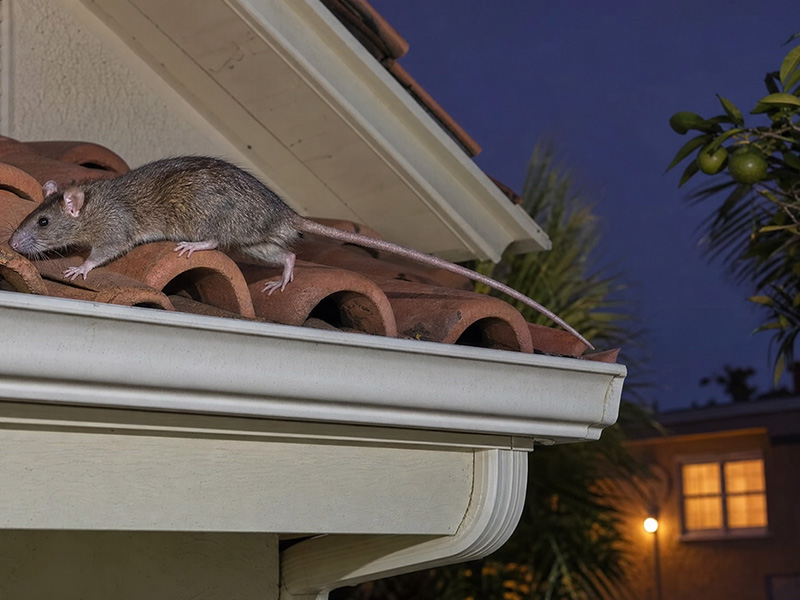
Why Roof Rats Are So Common in Tampa Bay
Tampa Bay provides roof rats with everything they need to stay active year-round. Warm temperatures, mature landscaping, fruit trees, and steady access to food and water make it easier for them to live close to homes.
Citrus trees are a major draw, which is why roof rats are often called fruit rats in Florida. Chewed fruit or fruit that has been hollowed out may be one of the first signs they are active around your property.
They also feed on birdseed, pet food, garden vegetables, nuts, garbage, and food stored in garages or outdoor areas. Once they find a dependable food source, nearby trees, palms, fences, and utility lines can help them move from yard to yard.
Extended dry periods may make irrigated properties even more attractive. Pet bowls, bird feeders, fruit trees, pools, and watered landscaping can provide reliable resources when the surrounding area is dry.
Drought does not cause a roof rat problem on its own, but it can increase activity around homes that already offer food, water, and shelter.
How Roof Rats Get Into Your Home
Roof rats are lean, agile climbers. Adults are commonly about six to eight inches long, not including a tail that may be as long as or longer than the body.
Unlike Norway rats, which are more closely associated with burrows and lower areas, roof rats frequently travel above ground. They may use tree branches, fences, utility lines, trellises, vines, and textured exterior walls to reach the roof.
Once they get there, an opening only about half an inch wide may be enough for an adult roof rat to squeeze through.
Around Tampa Bay homes, Anti-Pesto technicians often find gaps where soffits meet fascia boards, openings around roof vents and attic fans, and spaces around AC lines or plumbing penetrations.
Damaged soffits, loose roof materials, gaps where additions meet the original structure, and openings around utility lines can also provide access. At ground level, a garage door seal that does not sit flush may leave enough space for a rat to enter.
Older homes may develop even more openings as materials shift, separate, or deteriorate. Small gaps around rooflines, doors, vents, and exterior pipes can be difficult to see from the ground, but easy for a roof rat to use.
Anti-Pesto begins with an inspection to locate signs of activity and identify the openings that roof rats may be using. That allows us to recommend exclusion work based on the home rather than treating every roof rat problem the same way.
Signs Roof Rats May Be Inside
Roof rats are mostly active at night, so many homeowners hear them before they see them.
Common signs include:
- Scratching or scurrying above the ceiling
- Light thumping sounds in the attic at night
- Droppings in cabinets, pantries, garages, or attics
- Greasy rub marks along frequently used routes
- Gnaw marks on boxes, wood, wiring, or food packaging
- Torn or disturbed attic insulation
- Chewed fruit around the yard
- Pet food or birdseed disappearing overnight
Roof rats nest in attics and ceiling voids, but they'll travel through wall cavities and other hidden spaces to reach food. Droppings in a kitchen or lower cabinet do not necessarily show where the nest is located.
If you are noticing activity in more than one area, an Anti-Pesto inspection can help determine where the rats are traveling, how they are getting inside, and what may be needed to address the problem.
Roof Rats Can Damage Your Home
Roof rats do not simply pass through an attic. They may nest, feed, reproduce, and gnaw on nearby materials.
Electrical wiring is a major concern. Roof rats may chew through wire coatings, creating a fire hazard and requiring costly repairs.
They can also damage plastic plumbing or water lines, leading to leaks and water damage. Boxes, stored belongings, food packaging, and other materials may be gnawed or shredded for nesting.
Attic insulation often takes a hit as well. Roof rats may compress it, move it out of place, or tear it apart for nesting material. Urine, droppings, saliva, and nesting debris can also contaminate attic surfaces and insulation.
Don't sweep or vacuum dry droppings — it can kick contaminated particles into the air.
If roof rats have damaged or contaminated the insulation, Anti-Pesto also offers attic restoration that includes removing affected materials, deodorizing the space, and installing new pest control insulation.
Already hearing activity or seeing damage?
The longer roof rats stay, the more they can chew through — and the more it costs to fix. Request a free quote before the damage spreads.
Tampa Bay Rodent Control for Roof Rats
It is understandable to start with traps after hearing activity in the attic. Traps can remove roof rats already inside, but they do not close the openings that allowed them to enter.
For homes with active roof rat problems, Anti-Pesto offers stand-alone rodent control services that may include trapping, rodent exclusion, pest control insulation, exterior rodent stations, and written rodent warranties. The recommended service depends on where the rats are entering and whether they have damaged or contaminated the attic.
Exclusion is especially important when roof rats are using gaps around soffits, vents, rooflines, or utility penetrations. Closing those openings helps prevent new rats from replacing the ones already removed.
Anti-Pesto’s rodent exclusion service includes a six-month warranty. When exclusion is combined with insulation replacement, the service includes a one-year warranty that may be extended while Anti-Pesto maintains the exterior rodent stations.
Homeowners who want broader protection and ongoing service can also choose one of Anti-Pesto’s year-round home pest control plans.
These plans can be a good fit for homeowners who want help with rodent activity while also protecting their home from ants, cockroaches, spiders, wasps, fleas, and other pests common across Tampa Bay.
The right option depends on the amount of activity, the condition of the attic, and whether roof rats are still able to enter the home.
When Attic Restoration May Be Needed
Not every roof rat problem requires insulation removal. The amount of damage depends on how long the rodents have been present, where they nested, and how much contamination occurred.
Attic restoration may be needed when insulation has been heavily soiled by urine or droppings, shredded for nesting material, compressed, displaced, or contaminated across a large portion of the attic.
Anti-Pesto’s attic restoration service includes removing affected materials, deodorizing the space, and installing new pest control insulation after the roof rat problem has been addressed.
Steps That Can Make Your Property Less Attractive to Roof Rats
Property maintenance cannot remove roof rats already living inside, but it can make your yard and home less appealing to rodents and other pests.
Helpful steps include:
- Trim branches back from the roofline
- Remove fallen citrus and other fruit
- Store pet food indoors
- Keep birdseed in sealed containers
- Use garbage cans with tight-fitting lids
- Clear dense vegetation away from exterior walls
- Move woodpiles and stored materials away from the house
- Check whether daylight shows beneath the garage door
- Avoid leaving pet bowls outside overnight
Common Questions About Roof Rats in Tampa Bay
How can I tell the difference between roof rats and mice in my attic?
Size and droppings are the giveaways: roof rats are much larger with droppings about 1/2 inch long, while mouse droppings are tiny (about 1/8 inch). Heavier thumping usually means rats; light skittering usually means mice.
Does homeowners insurance cover roof rat damage?
Usually not — most policies treat rodent damage as a maintenance issue, not a covered peril. Check your specific policy to confirm.
Can roof rats come back after exclusion work is done?
It's possible if new openings form or food sources keep attracting them. That's why our exclusion work includes a warranty (six months, or one year with insulation replacement) and ongoing rodent station checks.
Schedule Roof Rat Control in Tampa Bay
Hearing scratching in the attic, finding droppings, or noticing chewed fruit around your home? Anti-Pesto can inspect the property, identify how roof rats are getting inside, and recommend the right next step.
Request a free quote or call (727) 382-8738 to schedule service.


