


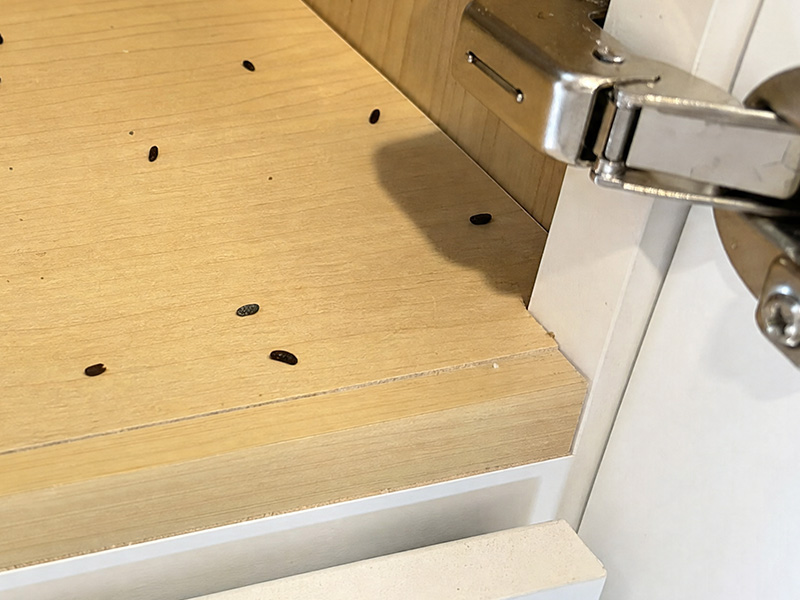
What Are the Signs of Mice in a House?
Mouse activity is not always obvious at first. You may notice one sign or several, depending on where the mice are spending their time.
Common signs include:
- Small, dark droppings in cabinets, drawers, garages, or other protected areas
- Gnaw marks on food packaging, cardboard, or other materials
- Scratching, rustling, or light movement inside walls or ceilings
- Shredded paper, insulation, fabric, or other nesting material
- A stale or musty odor in an area where mice are active
- Greasy smudges along frequently traveled edges or openings
- An occasional mouse sighting, especially after dark
Kitchens and pantries tend to get the most attention because food is easy to find there, but mouse activity is not limited to those rooms. Signs can also turn up in garages, laundry areas, attics, utility spaces, and storage areas.
Why Am I Hearing Scratching at Night?
Mice are most active when the house is quiet, which is why scratching or light movement after dark often gets a homeowner’s attention first.
They can travel inside wall voids, above ceilings, and through attics without being seen. In some cases, the sound may seem to move from one part of the house to another as mice move between nesting and feeding areas.
Not every nighttime noise is caused by mice, though. Roof rats are also common around Tampa Bay and can make sounds in attics and other elevated spaces. Based on the calls our team receives, roof rats are the rodent Tampa Bay homeowners contact Anti-Pesto about most often. Mice are still a problem in local homes, though, and can leave many of the same early warning signs.
Droppings, gnawing, nesting material, and where the activity is occurring can provide additional clues about what is going on inside the home.
Where Do Mice Hide Inside Tampa Bay Homes?
Mice look for places where they can stay protected and close to food.
Inside a home, that often means areas such as:
- Behind kitchen appliances
- Inside lower cabinets and pantries
- Garages and storage areas
- Attics
- Wall voids
- Laundry and utility rooms
- Areas around water heaters, plumbing, or HVAC equipment
A mouse does not need a large open area to make itself comfortable. Small, rarely disturbed spaces can provide plenty of protection, particularly if food is nearby.
That is also why a clean home can still have mice. Good sanitation can reduce some of the food available to rodents, but mice can enter homes for shelter and take advantage of surprisingly small amounts of available food.
How Do Mice Get Into a House?
Mice can squeeze through very small openings, including gaps about the width of a pencil.
Around Tampa Bay homes, possible entry points include gaps around garage doors, worn door sweeps, openings around plumbing or A/C lines, damaged vent screens, and gaps along exterior construction.
Garages can be especially easy access points. A small opening near the bottom corner of a garage door may be enough for a mouse to get inside, where stored food, pet food, boxes, and other materials can provide food or shelter.
Exterior conditions can contribute as well. Dense vegetation against the house, stored materials near exterior walls, and other sheltered areas can give rodents places to spend time close to the structure.
Once mice are moving around the exterior of a home, a small opening may be all they need to get inside.
Are Mice Only a Problem During Cooler Weather?
No. Tampa Bay does not experience the same kind of winter rodent pressure as colder parts of the country, but that does not mean mice disappear when the weather is warm.
Food, shelter, nesting areas, and easy access can make a home appealing at any time of year. In communities throughout the area, including Tampa, St. Petersburg, and Clearwater, mouse activity can be a year-round concern when homes provide the food, shelter, and access they need.
That makes mice another pest worth accounting for as part of ongoing home protection rather than something homeowners only need to think about during winter.
Why Can a Mouse Problem Be Easy to Miss?
Mice are small, quick, and good at staying out of sight. They can spend much of their time in areas homeowners rarely see, including wall voids, attics, cabinets, and storage spaces.
That can make a few droppings or an occasional noise seem minor. But those signs mean mice are finding what they need somewhere in or around the house.
Even without frequent sightings, mouse activity can lead to damaged food packaging, contaminated areas, gnawed materials, and continued activity in parts of the home you may not regularly see.
How Does Ongoing Pest Control Help With Mice?
Since mice are only one of many pests that can find their way into Tampa Bay homes throughout the year, having an ongoing pest control plan means you already have coverage in place when pest activity shows up.
Anti-Pesto offers home pest control plans for Tampa Bay homeowners. Border Patrol Green™ provides ongoing preventative pest service and covers more than 25 common household pests, including mice and rats. Rodent trapping is also included with the plan.
That coverage goes beyond rodents. Ants, cockroaches, spiders, crickets, silverfish, and other common pests are included as well, and the plan is backed by Anti-Pesto’s 100% satisfaction guarantee.
For homeowners who want year-round protection against the pests most likely to show up around their homes, an ongoing plan means mice are already part of the coverage rather than a completely separate pest concern.
Anti-Pesto also offers rodent control.
Protect Your Home From Mice and Other Pests
Whether you’re noticing signs of mice now or want ongoing protection against the pests that show up around Tampa Bay homes, Anti-Pesto Bug Killers can help.
We’ve protected Tampa Bay homes since 1988. Contact Anti-Pesto Bug Killers today to get started.


