
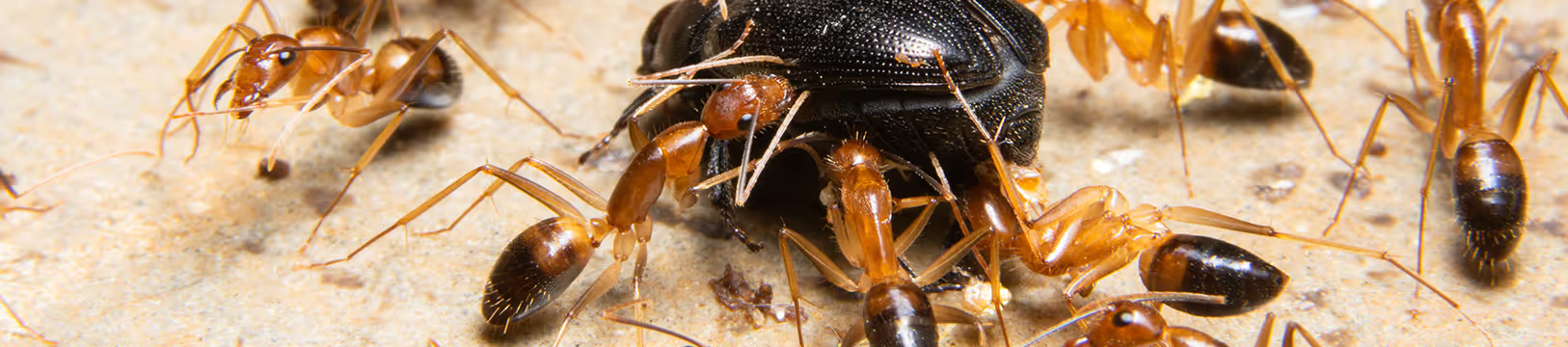
Ghost ants are tiny, pale ants commonly found in Florida homes. Because of their size and color, they’re easy to miss at first—until you start noticing trails in your kitchen or bathroom.
In Tampa Bay, ghost ants are one of the more common indoor ant issues homeowners deal with. Knowing what to look for, where they show up, and what attracts them can help you understand why they’re in your home and what to do next.

Ghost ants are active year-round in Tampa Bay due to the region’s warm climate. Activity is typically steady during the winter months (January, February, November, and December), when they remain active but less noticeable. From March through October, ghost ant activity increases and is considered very active, as heat, humidity, and frequent rain create ideal conditions for foraging and spreading.
Ghost ants are very small—about 1/16 of an inch long, or roughly the size of a grain of sugar.
They have:
Because their bodies are so light in color, they can be hard to see on countertops, tile floors, or walls. Many homeowners don’t notice them until they start moving in a line.
In Tampa Bay homes, ghost ants are usually found indoors, especially in areas with moisture or food. You’ll often see them in kitchens and bathrooms, inside cabinets, along baseboards, near sinks and plumbing, and around windows and doors.
It’s also common to notice them near sliding glass doors or areas leading out to a lanai. They tend to travel along edges and seams, which is why you’ll often see them following the same path over and over.
Ghost ants are drawn to small food and moisture sources inside the home. Sweet foods and sugary residue are a big attractant, along with crumbs, spills, and pet food left out.
Moisture also plays a role, especially around sinks, dishwashers, or other damp areas.
Even in clean kitchens, small amounts of residue—like grease near the stove or crumbs under appliances—can be enough to attract them.
Ghost ants are active much of the year in Tampa Bay, but you’re most likely to notice them inside when outdoor conditions shift.
Heavy rain can flood their nesting areas and push them closer to the home, while extreme heat and dry stretches can drive them inside in search of moisture. That’s why activity often picks up after storms or during hotter parts of the year.
Once they’re near the structure, it doesn’t take much for them to get inside. In many Tampa Bay homes built on concrete slabs, ghost ants can slip through small gaps around doors, windows, or plumbing and start trailing along walls, cabinets, or baseboards.
Ghost ants are mostly a nuisance, but they can quickly become frustrating. They tend to appear in large numbers, contaminate food, and spread to multiple areas of the home. Because they’re so small, they’re easy to overlook at first, which often allows the problem to grow before homeowners realize what’s happening.
Ghost ants are known for forming multiple colonies.
When disturbed, they can split into smaller groups and spread, which makes them difficult to eliminate with basic treatments. You may think the problem is gone, only to see them pop up somewhere else.
They also tend to nest in hidden areas, like wall voids or behind cabinets, where they’re hard to reach.
Because ghost ants can spread quickly and nest in hard-to-reach areas, getting them under control usually takes more than just treating what you see.
The most effective approach focuses on where ants are active, how they’re getting inside, and stopping that cycle.
At Anti-Pesto, ghost ants are covered under our residential pest control plans.
We start with a thorough inspection of your home—inside and out—to identify entry points, locate nesting areas, and assess the severity of the problem.
From there, we eliminate active ants with targeted treatments and create a protective barrier around the outside of your home to prevent pests from entering.
Ongoing pest treatments throughout the year ensure ants and other house-infesting pests don’t have the chance to sneak into your home.
And if ghost ants or other covered pests show up in between routine pest treatments, we will come back to re-treat—at no extra cost.
Ghost ants don’t typically bite and are not considered dangerous to people. Unlike fire ants, they don’t sting. Most homeowners consider them a nuisance, especially when they appear in kitchens, bathrooms, and other areas of the home.
Ghost ants can develop wings, but most homeowners will never see them. Reproductive ants (called swarmers) may have wings, but ghost ants don’t swarm in large, noticeable groups like some other ant species.
Ghost ants are often attracted to moisture and small food sources around pool areas. Spilled drinks, food, or even residue on outdoor furniture can draw them in, and the constant moisture around the pool creates an ideal environment.
In Tampa Bay, it’s also common to see ghost ants around pools after rain or during hot weather, when they move closer to the home looking for water and more stable conditions.
Keeping surfaces clean, wiping up spills, and limiting moisture around sinks can help reduce what attracts ghost ants. Sealing small gaps around doors, windows, and plumbing may also help limit entry points.
Because ghost ants can nest in hidden areas and form multiple colonies, prevention alone usually isn’t enough once activity starts.
If you’re seeing ghost ants in your home, there’s usually a reason—and they’re not likely to go away on their own.
Anti-Pesto helps Tampa Bay homeowners get control of ant problems with residential pest control designed for homes in this area.
Request a quote today or call to get started.

From the first contact call the staff was very professional, courteous and informative. We discussed the issues and set a plan with an appointment within a couple days. Shane, our technician, was very prompt and courteous. Very informative during the inspection process and strategically put a deterrent plan in place. I would highly recommend Anti-Pesto Bug Killers.
Jim J.
Largo, FL

We had a wasp infestation in our backyard shed. Anti-Pesto responded immediately and were out to our place within about two hours and took care of everything thoroughly. They will even follow-up again within two weeks to be sure that the problem does not recur. They are awesome!
Daniel Z.
Largo, FL

Amazing quality work. I’ve had a few pest control companies spray and ants would still enter our home and act as roommates. Sam Hurtado is our technician and he answers everything with knowledge and always brings quality work. Even if there was recent pest work they always arrange if I have issues. Thank you!!
Trish N.
Tampa, FL


Helpful Tips & Info


