

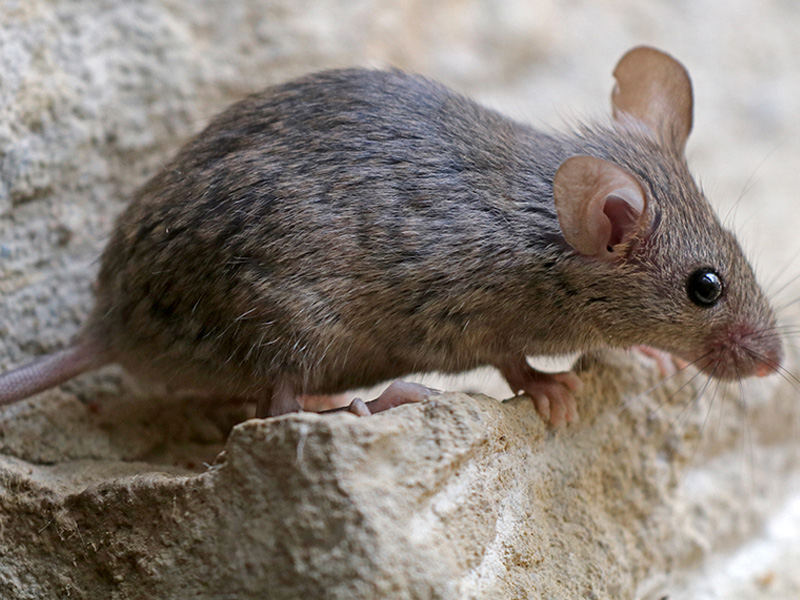
House mice are small rodents that typically measure about two and a half to four inches long, not including the tail. Adults usually weigh less than an ounce. Their fur ranges from brown to gray, and their tails are roughly as long as their bodies.
House mice have relatively large ears, small dark eyes, and a pointed snout. Their small size and slender build can help distinguish them from young rats.
House mice can be active throughout the year in Tampa Bay, with no pronounced seasonal peak. Mice living indoors have access to relatively stable temperatures, food, and shelter, so activity can continue in any month.
House mice are primarily nocturnal, with most feeding and movement taking place after dark. They prefer grains and seeds but will eat a wide variety of foods.
Around homes, mice may feed on cereal, pantry goods, crumbs, pet food, birdseed, and other readily available food. They typically eat small amounts during multiple feeding periods rather than consuming one large meal.
House mice occur throughout Florida, including the Tampa Bay area.
House mice often live outdoors in fields and other protected areas but can move into homes, garages, storage buildings, and other structures where food and shelter are available. Once indoors, they tend to remain fairly close to their nesting and feeding areas.
House mice can contaminate food, stored items, and surfaces with urine, droppings, and nesting material.
They are associated with illnesses including salmonellosis and lymphocytic choriomeningitis, or LCM. Mouse allergens can also contribute to allergy and asthma symptoms in susceptible people.
Mice can also carry parasites such as fleas and mites.
Droppings and contaminated nesting materials should be handled carefully rather than swept or vacuumed while dry.
House mice gnaw frequently to help wear down their continuously growing teeth. In homes and buildings, this can result in damage to food packaging, stored belongings, insulation, drywall, and other materials.
They may also chew the protective covering around electrical wiring. Damaged wiring can create electrical problems and, in some situations, increase the risk of fire.
Mice also shred paper, fabric, insulation, and similar materials when building nests.
House mice can fit through openings about a quarter inch wide—roughly the width of the end of a pencil.
Potential entry points include gaps:
Once inside, mice may move through wall voids, cabinets, attics, garages, and other concealed spaces.
House mice choose sheltered nesting locations that provide protection and convenient access to food.
Indoors, nests may be found:
Their nests are commonly made from shredded paper, fabric, insulation, and other soft materials.
You are often more likely to find evidence of mice than see the rodents themselves.
Common signs include:
Droppings are often found near feeding, nesting, or travel areas, including cabinets, drawers, garages, storage areas, and along walls.
Individual traps can catch mice, but successful control also depends on finding and correcting the conditions that allow them inside.
If openings remain accessible, additional mice can enter even after the mice already inside have been removed. Hidden nesting locations can also make it difficult to determine how much activity is present.
Professional rodent control from Anti-Pesto starts with evaluating where rodents are active and how they may be getting into the structure.
Depending on the conditions at the home, rodent service may include trapping, exclusion work to help close accessible entry points, exterior rodent stations where appropriate, and follow-up service. For homes where rodent activity has damaged or contaminated attic insulation, attic restoration and insulation services are also available.
For homeowners who want broader, ongoing pest protection, Anti-Pesto's residential pest control plans include rodent trapping along with coverage for other common household pests.
Reducing potential entry points, food, and shelter can make a property less inviting to mice.
If you've found droppings, heard movement after dark, or noticed other signs of rodents, contact Anti-Pesto to request an inspection and determine what is active in your home.
Why are rodents coming into Tampa Bay homes this fall? Food and sheltered nesting spaces can draw mice and rats into garages, kitchens and attics. We're seeing rodent inquiries up 16% over the past two weeks, led by St. Petersburg. Fall is a useful time to check access points; rodents don't need a cold snap to use an opening.
Look for gnawed food packaging, droppings along walls, shredded nesting material or repeated scratching sounds in concealed spaces. Sounds alone don't identify the animal, so look for additional clues before deciding how to respond. Check quiet storage areas as well as rooms used every day.
Store pantry goods and pet food in sturdy, closed containers. Remove pet food after meals rather than leaving it out overnight. Keep garbage lids secure. Inspect door sweeps and gaps around utility lines, and have suspected active entry points assessed before closing animals inside.
We're also seeing a modest rise in fly inquiries across Tampa Bay. Promptly removing food scraps and keeping outdoor bins closed can reduce the material that attracts flies around the home.
If droppings recur, packaging keeps getting gnawed or scratching persists, it's time for a closer inspection. Anti-Pesto Bug Killers can help identify entry routes and plan next steps. Learn about our rodent control service.

From the first contact call the staff was very professional, courteous and informative. We discussed the issues and set a plan with an appointment within a couple days. Shane, our technician, was very prompt and courteous. Very informative during the inspection process and strategically put a deterrent plan in place. I would highly recommend Anti-Pesto Bug Killers.
Jim J.
Largo, FL

We had a wasp infestation in our backyard shed. Anti-Pesto responded immediately and were out to our place within about two hours and took care of everything thoroughly. They will even follow-up again within two weeks to be sure that the problem does not recur. They are awesome!
Daniel Z.
Largo, FL

Amazing quality work. I’ve had a few pest control companies spray and ants would still enter our home and act as roommates. Sam Hurtado is our technician and he answers everything with knowledge and always brings quality work. Even if there was recent pest work they always arrange if I have issues. Thank you!!
Trish N.
Tampa, FL


Helpful Tips & Info


